
Seasonal Affiliate Strategy: How to 3x Revenue During Peak Buying Months
Most affiliate marketers treat their calendar like it’s January all year. They publish reviews, roundups, and comparisons on a consistent schedule — which is good — but they don’t adjust their output or strategy to match the buying patterns that determine when their audience actually purchases. That’s a significant missed opportunity.
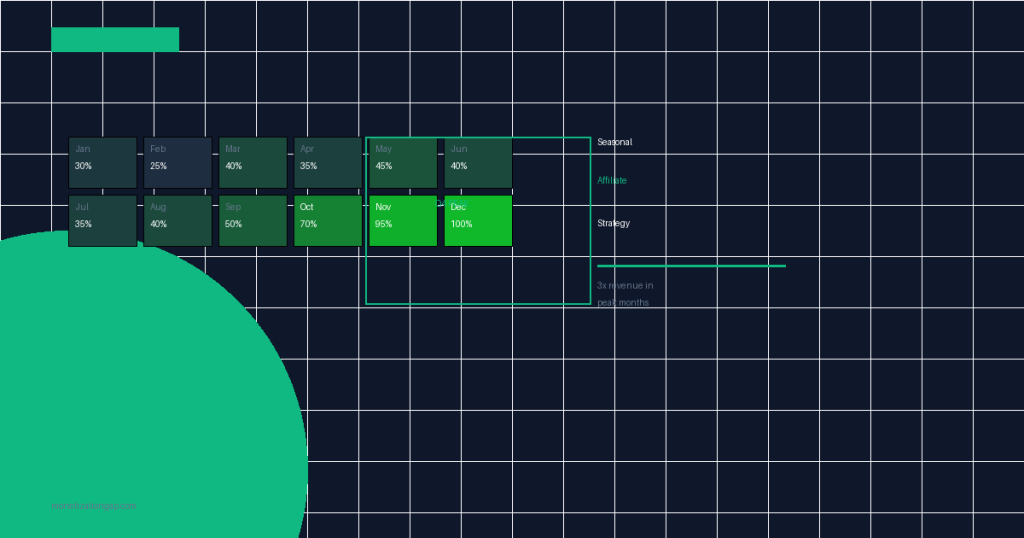
The data is clear: affiliate revenue is not evenly distributed across the year. For publishers in the right niches with planned seasonal content, Q4 alone represents 40–60% of annual income. For outdoor gear bloggers, spring is equally massive. For fitness, January through February outperforms every other two-month window.
The mechanism behind seasonal spikes isn’t just increased traffic — it’s increased purchase intent. The same visitor who passively reads your “best running shoes” guide in June will make a buying decision on that same page in December. Understanding when intent peaks in your niche is the entire game.
Seasonal Revenue Patterns by Niche
Before building a seasonal strategy, you need to know when your niche peaks — it varies dramatically. The table below shows when each niche typically experiences its highest affiliate conversion rates based on consumer buying behavior.
| Niche | Peak Season(s) | Revenue Share in Peak | Pre-Season Start |
|---|---|---|---|
| Tech / Gadgets | Q4 (Oct–Dec) | 50–65% of annual revenue | August |
| Fitness / Exercise Equipment | January, September | Jan: 20%, Sep: 15% | November (for Jan) |
| Home Improvement | Spring (Mar–May) | 35–45% of annual revenue | January |
| Outdoor / Camping / Hunting | Spring + Q4 | 25% spring, 35% Q4 | February (spring), August (Q4) |
| Personal Finance / Credit Cards | January, Tax Season (Feb–Apr) | Jan: 18%, Tax: 22% | November (for Jan) |
| Software / SaaS Tools | Q4 + January (Year-end/New year) | Q4: 30%, Jan: 15% | September |
| Travel | Winter planning (Jan–Feb), Summer (Jun–Aug) | Jan–Feb: 25%, Summer: 30% | October (for winter) |
| Back-to-School (general) | July–September | 40–55% of annual revenue | May |
Days of lead time you need before your peak season starts. Content published 90 days before a seasonal search surge has the highest probability of ranking at position 1–5 when search volume peaks. Content published after the season starts rarely ranks in time to generate meaningful revenue.
The 90-Day Pre-Season Preparation Checklist
This checklist applies to any season — substitute your peak dates as appropriate. The Q4 version is shown as the benchmark; it’s the most high-stakes seasonal window for most affiliate publishers.
90 Days Out (Early Preparation)
- Audit last year’s seasonal content performance — identify top 5 pages by revenue, top 5 by traffic, and any that underperformed expectations
- Research which affiliate programs are running seasonal promotions or commission rate increases — check affiliate newsletters and manager communications
- Identify 10–15 new seasonal keyword targets using Google Search Console (prior year search volume spikes) and a keyword tool
- Refresh all existing seasonal pages from prior years — update pricing, add new products, confirm affiliate links are not broken
- Plan your content calendar for the season: assign targets to publish dates, prioritize by search volume × buyer intent × commission value
60 Days Out (Content Creation)
- Publish all new “comparison” and “roundup” seasonal posts — these need time to accumulate internal links and engagement signals
- Update internal linking structure — link all relevant evergreen content to new seasonal posts to pass authority
- Write deal-tracking posts if relevant (“Best Black Friday Deals on X”) — placeholder structure can be published now, filled in closer to the date
- Prepare your email marketing calendar for the season — map content releases to email sends
- Brief social media content tied to seasonal posts
30 Days Out (Optimization)
- Check rankings for seasonal target keywords — posts not yet on page 1 should get a round of internal link additions and content depth improvements
- Load actual deal data and current pricing into deal-tracking posts
- Set up Google Search Console alerts for CTR drops on seasonal pages
- Prepare email sequences — first email should send as the season opens, not after
- Confirm all affiliate tracking links are firing correctly — test each manually
Free Resource
The full seasonal planning template — with calendar, affiliate program tracker, and keyword research framework — is inside the Monetization Gap Playbook.
Content Types That Work by Season
Not all content formats perform equally across seasons. The buying mode of your audience changes what they want to read and what type of content triggers conversion.
Gift Guides & “Best Deals” Posts
High intent, time-pressured buying. Roundup format with clear “buy now” CTAs performs best. Include price points in the headline. Update in real-time during peak deal days.
Resolution-Oriented Reviews
“Best X for beginners” and “How to start X in [Year]” — these capture buyers who just decided to act. Pair with a welcome email sequence for new subscribers acquired in Q4.
Setup Guides & Gear Roundups
“What you need to start X this year” format converts strongly in spring. Combine with comparison posts between last year’s and this year’s models. Gear-heavy niches see high AOV in this window.
Category-Specific “Best For” Lists
“Best laptops for college students” / “Best budget X for beginners” — search queries explicitly filter by student/budget context. Commission per sale is lower but volume makes up the difference.
Urgency-Driven Deal Posts
“X is on sale right now” posts work year-round for hot products. These require fast publishing when a deal goes live — have your template ready, not your process to invent mid-spike.
Comparison & “Worth It?” Posts
Readers research 4–8 weeks before peak buying. “Is X worth buying in [Year]?” and “X vs Y” posts rank during the research phase and convert as the season opens. Don’t write these during the season — write them before it.
Q4 Black Friday Strategy: The 6-Week Playbook
Black Friday through Cyber Monday represents the single highest-RPV window of the year for most product niches. Here is the six-week execution timeline used by publishers who generate their highest monthly revenue in November.
Q4 Black Friday Execution Timeline
Oct 1–7
Content Audit & Gap Analysis
Pull last year’s Black Friday content from Google Search Console. Identify which posts ranked but didn’t convert. Identify which posts converted but didn’t rank. Fix both problems before new content is written.
Oct 8–14
Publish Comparison & Review Content
All “X vs Y” and “Best X for [audience]” posts go live this week. They need 4–5 weeks to accumulate ranking signals before Black Friday traffic peaks. Posts published after November 1 typically can’t rank in time.
Oct 15–21
Build Deal Tracker Pages
Create “Best Black Friday Deals on X [Year]” pages with placeholder deal data. Publish them now so they have 5+ weeks of index time. Update them with real deals starting November 1 and daily from November 20 onward.
Oct 22–28
Internal Linking Sprint
Add links from your 20–30 highest-traffic evergreen posts to your seasonal pages. Focus on contextual in-body links, not footer or sidebar links. This is the fastest ranking signal you can control.
Oct 29 – Nov 4
Email Sequence & Social Prep
Load your Black Friday email sequence into your ESP. First email goes out November 18. Prepare social posts tied to each major deal day (Nov 21, Black Friday, Cyber Monday). Schedule or queue them now.
Nov 18–Dec 1
Live Season Execution
Update deal pages daily. Monitor affiliate program deal feeds for new offers. Send email on Nov 18 (early deals), Black Friday morning, and Cyber Monday. Track RPV by page daily — shift email and social traffic toward your highest-converting pages.
Off-Season Tactics: Maintaining Revenue in Low-Intent Months
Revenue doesn’t have to crater between seasons. Off-season months are the best time to build the infrastructure that makes peak seasons more profitable.
1. Build Evergreen Content That Ranks Before Next Season
Off-season is when you write the content that will rank in time for next peak. A comprehensive “best [product category]” guide written in February will have 6–8 months to rank before Q4. The same guide written in September has 8 weeks.
2. Email List Nurturing
Subscribers acquired during Q4 are worth more than you’ll earn from them that quarter if you maintain the relationship. Off-season email content — useful, non-promotional — keeps your list warm so it converts when you send seasonal deals. See our full guide to the affiliate content structures that work in each content format.
3. Affiliate Program Negotiation
Off-season is when affiliate managers have time to talk. Negotiate rate increases, early access to deal information, and exclusive coupon codes for your audience. These conversations are nearly impossible to initiate during peak season when everyone is busy.
4. Review and Update Existing Content
Google rewards freshness on competitive queries. Off-season monthly content audits — updating pricing, adding new competitors to comparison tables, refreshing screenshots — keep your best pages in position when peak season traffic arrives. See the high-RPV affiliate programs guide for which programs have the best seasonal incentive structures.
Seasonal Content Calendar Template
Use this 12-month framework as a planning skeleton. Replace niche-specific details with your own peak seasons from the benchmark table above.
New Year + Tax Season + Spring Prep
Publish New Year resolution content by December 26. Begin spring-season research content in February. Tax-related niches (finance software, accounting tools) peak February–April.
Spring Buying Season
Home improvement, outdoor, gardening, fitness — all peak. Mother’s Day (early May) and Father’s Day (mid-June) spike gift-guide search volume. Back-to-school early research begins late June.
Back-to-School + Pre-Q4 Build
Back-to-school peaks July–September for most education-adjacent niches. Begin publishing Q4 comparison and review content in late August/September to ensure ranking by November.
Peak Revenue Season
October: finalize seasonal content. November 1–20: early deal promotions. November 21–30: Black Friday/Cyber Monday sprint. December 1–20: last-minute gift guides. December 26 onward: New Year prep content live.
Frequently Asked Questions
When should I start creating Black Friday affiliate content?
Start 90 days before Black Friday — early September. Content published in September has time to rank in Google before peak traffic hits in November. Content published in October still catches some ranking, but content published after November 1 has almost no chance of ranking for competitive Black Friday searches in the same year.
Which niches have the highest Q4 affiliate revenue spikes?
Tech/gadgets, home improvement, fitness equipment, software/SaaS (year-end deals), outdoor gear, and beauty all see Q4 spikes of 200–400% over monthly baseline. Personal finance niches see a January spike tied to New Year financial resolutions rather than Q4 shopping peaks.
Do affiliate programs change their commission rates seasonally?
Yes — many programs temporarily increase commissions during Q4 to incentivize affiliates to prioritize their offers. Amazon Associates has run commission-rate promotions during major shopping events. Monitor your affiliate program newsletter from September onward to capture these windows — they’re often announced only a few weeks in advance.
How do I avoid a revenue cliff after Q4 ends?
Plan your January and February content 60 days in advance. New Year resolution niches (fitness, finance, productivity) spike in January. Valentine’s Day commerce picks up in mid-January for many niches. Having seasonal content live on January 1 positions you for the first post-Q4 buying wave rather than scrambling to publish after the spike starts.
Should I update seasonal affiliate content every year?
Yes — refresh seasonal posts 8–10 weeks before the season starts each year. Update pricing, add new product options, refresh any expired deals, and update the publish date. Pages that ranked well from prior years hold a significant SEO advantage if they stay fresh and accurate; abandoning them and creating new URLs wastes that accumulated authority.
Turn Seasonal Peaks Into Predictable Revenue
The Monetization Gap Playbook includes the full seasonal planning spreadsheet, affiliate program negotiation scripts, and the Black Friday content checklist.